




Unveiling the Unknowable? A Look at the Death Date Calculator App
Mortality is one of humanity's oldest and most profound mysteries. While philosophers and scientists have pondered it for millennia, a modern, digital curiosity has emerged in the form of the Death Date Calculator app. This application ventures where few dare, offering users a calculated prediction of their life's end date. It's a concept that instantly sparks intrigue, skepticism, and a touch of morbid fascination. But what does this app actually do, and is it a profound tool for self-reflection or merely a sophisticated piece of entertainment?
How Does It Claim to Work?
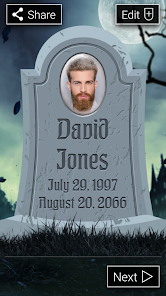
The Death Date Calculator typically positions itself not as a mystical oracle, but as an algorithm-based estimator. Users are prompted to input a range of personal data, which often includes basic biometrics like age, gender, and height, alongside lifestyle factors such as smoking habits, alcohol consumption, diet, exercise frequency, and even stress levels. Some versions may incorporate more specific health data or family medical history. The app's core engine then processes this information against statistical models, often citing actuarial data and population health studies, to generate an estimated date of death and a projected lifespan in years. The result is usually presented with a countdown timer or a calendar marker, making the abstract concept of mortality strikingly tangible.
The Psychology Behind the Curiosity
The app's undeniable appeal lies in its engagement with a universal taboo. By presenting a specific date, it transforms an inevitable but vague future event into a defined point in time. This can trigger a range of psychological responses. For some, it serves as a powerful memento mori—a reminder of one's mortality that can inspire positive life changes, such as adopting healthier habits, prioritizing relationships, or pursuing long-delayed goals. The shock value of the prediction can be a catalyst for introspection. For others, it's simply a source of macabre fun, a party trick to compare results with friends, highlighting its role as a conversational piece rather than a serious life-planning tool.
Important Limitations and Considerations
It is absolutely critical to approach this app with a strong sense of perspective. The prediction is a statistical generalization, not a diagnosis or a fate. It cannot account for random accidents, unforeseen genetic factors, future medical breakthroughs, or the infinite complexities of individual human biology. Relying on its result for serious life decisions or allowing it to cause significant anxiety would be a profound mistake. The app's primary value is not in its predictive accuracy, which is inherently flawed, but in the personal audit it prompts. The very act of inputting your lifestyle data forces a moment of honest self-assessment about your health choices.
Final Verdict: A Mirror, Not a Crystal Ball
The Death Date Calculator app is less a fortune-telling device and more a digital mirror reflecting your current lifestyle choices through the lens of mortality statistics. Its competitiveness lies in its unique, provocative premise that challenges users to confront a topic most software avoids. As a tool for sparking self-awareness and potentially motivating healthier behavior, it has a novel value. However, its entertainment and contemplative utility far outweigh any legitimate predictive power. Ultimately, the app's greatest lesson may be that while the exact date remains life's ultimate secret, the quality of the time we have is very much in our own hands. Use it as a thought-provoking prompt, not a prophecy.


